
Pitru Paksha — the 15th of the ancestors and the great Mela of Gaya
Ritual pilgrimage — 15 ancestors · Gaya, Bihar, India
Medium
The festival
For sixteen days India fed its dead by calling them by name.
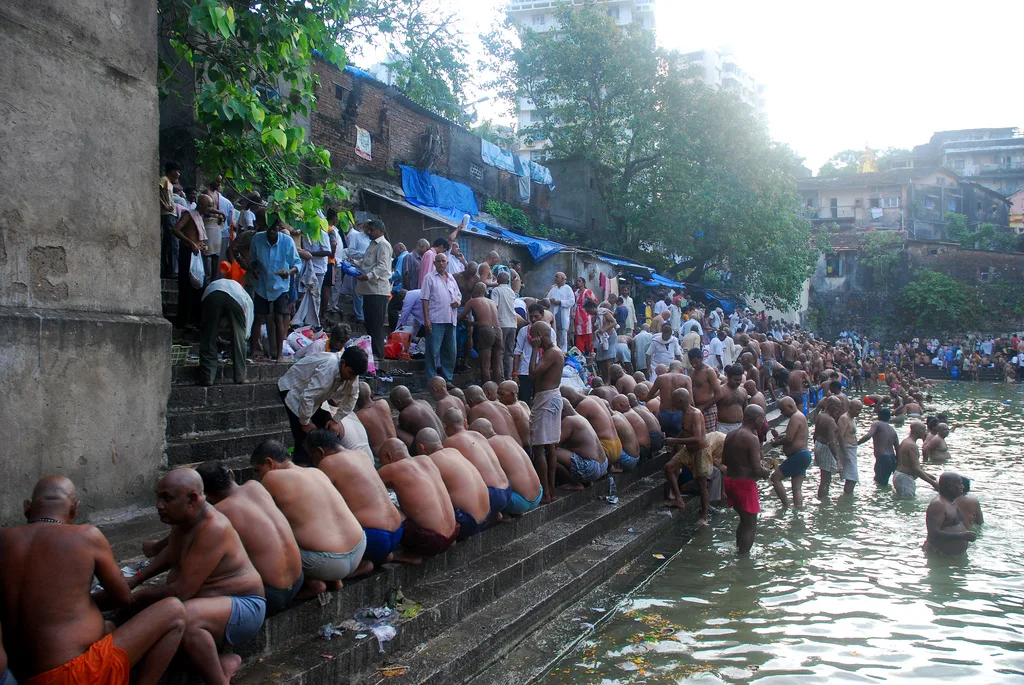
Pitru Paksha — literally the "forty of the ancestors" — is a ritual period of the Hindu calendar, observed throughout India: families carry out the Shraddha (food offerings on the lunar day of death), Tarpan (water, black sesame, barley and kusha grass, offered facing the south) and Pind Daan (rice bowls offered to feed the soul and open the release, the moksha); meals are also served to the brahmans, cows, dogs and ravens, held for the messengers of the ancestors.
In Gaya, on the banks of the Falgu and at the Vishnupad temple, tradition says that only one Pind Daan frees the entire ancestral lineage — and the fifteen takes the form of an immense public gathering organized there: the Pitru Paksha Mela.
Good to know
Pitru Paksha is first a religious observance collected — no shows, no ticketing. The Mela de Gaya is supervised by the Bihar Tourism Department and the Gaya District Administration; the BSTDC operates services to pilgrims (city of 2,500 beds in 2026, Pind Daan and e-Pind Daan packages, helpline). 2026 attendance in Gaya: 37.5 lakh of visitors counted by the Bihar Tourism Department (figure reported by Patna Press; counting perimeters probably covering the entire season in Gaya). Dates 2027 to be confirmed on panchanga. Photo credit: © Firoz Shakir — CC BY-SA 3.0, via Wikimedia Commons (Pitru Paksha rites, 2007).