
The 10 most unusual festivals in the world
An hour battle under 150 tons of tomatoes, a devil jumping over the babies of a village, a beauty contest judged by women where men make up, hairstyles carved by the gel at -20 °C... Festival TV has passed its catalog in a sifting : these are the ten most unusual festivals in the world – they all feature there.

There are festivals that we listen to, the ones we watch — and then there are those that we hardly believe in. An hour-long battle under 150 tons of tomatoes, a devil jumping over the babies of a village, a beauty contest where men make up themselves for hours to be chosen by women, a two-ton banquet served to monkeys, hairstyles carved by the frost at -20°C... Everywhere on the planet, communities have transformed a belief, legend or mere grain of madness into an annual meeting that entire crowds cross continents to live.
Festival TV has scrutinized its catalogue and has made up its ranking of the ten most unusual festivals in the world. Common point of these ten festivals: they do exist, they come back every year — and they all appear in our catalogue, with their complete sheet. In the lead, La Tomatina de Buñol, Spain, one of the most unusual festivals in the world: follow the guide, from the red streets of Valencia to the hot springs of the Yukon.
N° 1 — The Tomatina (Buñol, Spain): 150 tons of tomatoes for the party
On the last Wednesday of August, at noon, a rocket bursts over Buñol, a small town in Valencia province: seven trucks then pour their cargo into the narrow streets, and for exactly an hour, the crowd clashed with ripe tomatoes. At the edition of 2026, 150 tons of tomatoes were deployed. Before the battle, the most agile attempt the palo jabón: climb a greased mast to get the ham hung at the top. Born of a street fight in 1945, banned and then re-authorised in 1957, Tomatina The next edition is the 80th, on Wednesday, August 25, 2027, Battle from 12 p.m. to 1 p.m.
Catalogue sheet Festival TV (heading Nos Festivals): « The Tomatina Official website: https://latomatina.info/
N° 2 — El Colacho (Castrillo de Murcia, Spain): the devil jumps over babies
In Castrillo de Murcia, near Burgos, the feasts of Corpus Christi (the Feast of God) culminated in a rite that the village had perpetuated since the 1620s: a man disguised as a devil — Colacho, red and yellow suit, horn mask — runs through the streets and then jumps over mattresses laid on the ground, where babies born in the year are lying. According to local belief, the jump purifies infants from original sin and protects them from bad spirits; they are then blessed and sprinkled with flower petals. No injured babies have been reported — the rite, however spectacular, is choreographed by a whole village by a millimetre. Next expected edition: Sunday, May 30, 2027, in the wake of the Feast of God (Thursday, May 27, 2027) — date derived from the liturgical calendar, to be confirmed.
Catalogue sheet Festival TV (heading Nos Festivals): « El Colacho — the devil's jump over babies No official dedicated site (parochial and village party).
N° 3 — Guérewol (In-Gall, Niger): The beauty contest of men
In the Niger Sahel, at the end of the rainy season, the Wodaabe clans — the nomadic peuls — gather in the wake of the Salavian Cure, the great gathering of herders, to Guérewol : a beauty contest and a court ritual reserved for men. Young dancers prepare for hours: face painted in red ochre, white dots, lips blackened to bring out whiteness of teeth. Then they dance in lines, for hours, rolling their eyes and smiling widely — the ideal of local beauty holds in three signs: the size, the whiteness of the eyes and the whiteness of the teeth. In the opposite direction, the judges are young women, and they are the most beautiful. An ancestral ritual transmitted orally, Guérewol has no ticketing or fixed dates published: it is held at the end of September, at the pace of the pastoral calendar.
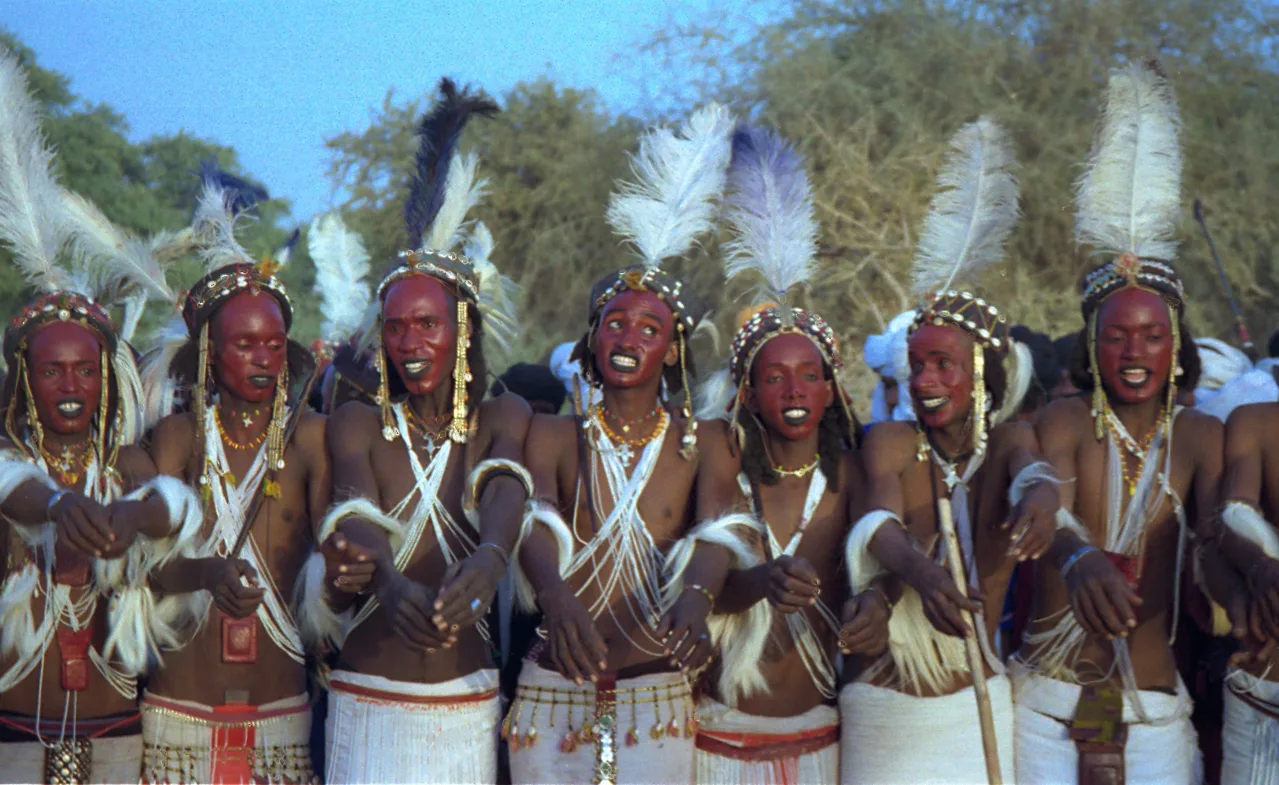
Catalogue sheet Festival TV (heading Nos Festivals): « Guérewol — The Wodaabe Men's Beauty Contest No official website (Wodaabe clan gathering).
N° 4 — Battle of the Oranges (Ivrea, Italy): the revolt replayed with citrus strokes
During the last three days of the Carnival, the Piedmontese city of Ivrea replays its medieval revolt against a tyrant — with the stroke of oranges, hundreds of thousands. Nine teams of aranceri on foot face the guards of the tyrant, who are judged on tanks fired by horses; the projectiles fly on all sides and the battle rages in the streets and in the squares. The founding legend famous Violetta, the daughter of a miller who, in the 12th-XIIIth century, killed the tyrannical Marquis and raised the city. About 5,000 fighters take part in the battles, and the oranges used end up in compost distributed to the public. Next edition: battles from Sunday 7 to Tuesday gras February 9, 2027.
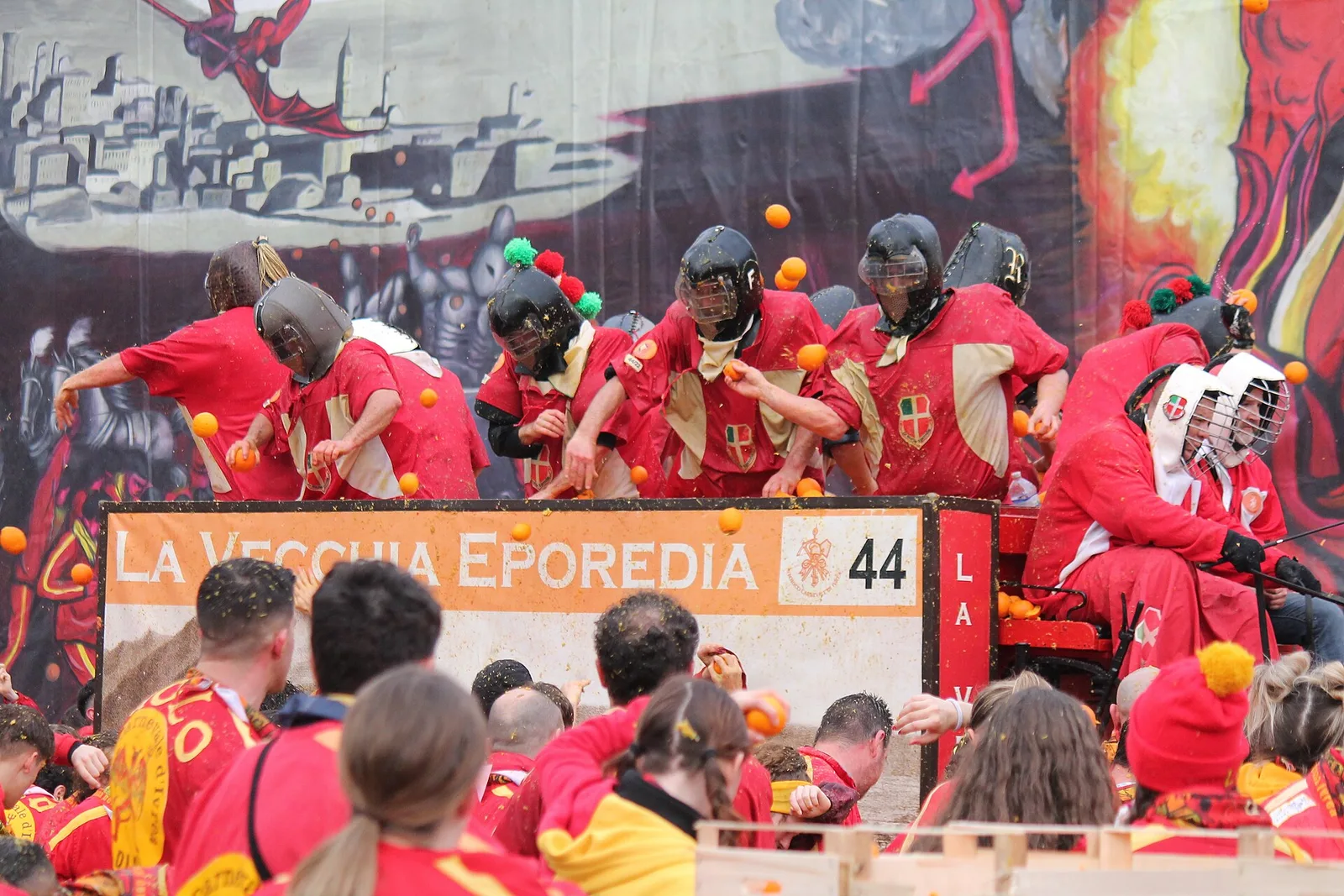
Catalogue sheet Festival TV (heading Nos Festivals): « Battle of the Oranges — Storico Carnevale di Ivrea Official website: https://storicocarnevaleivrea.it
N° 5 — Up Helly Aa (Lerwick, Shetland Islands, Scotland): a thousand torches and a burning drakkar
To mark the end of the Yule season, Lerwick, capital of the Shetland Islands, set off for one night. Hundreds of costumed guizers — up to a thousand in the procession — march through the torch behind the Guizer Jarl and his Viking troops, before the moment the entire city awaits: the fire of a replica of drakkar, built for months to be burned in a few minutes. The festival in its present form dates back to 1881, and the drakkar has been burning there since the 1880s; British guides present it as the largest festival of the fire in Europe. The night then extends from room to room, to sarynets and dances. Next edition: Tuesday 26 January 2027 — still the last Tuesday in January.
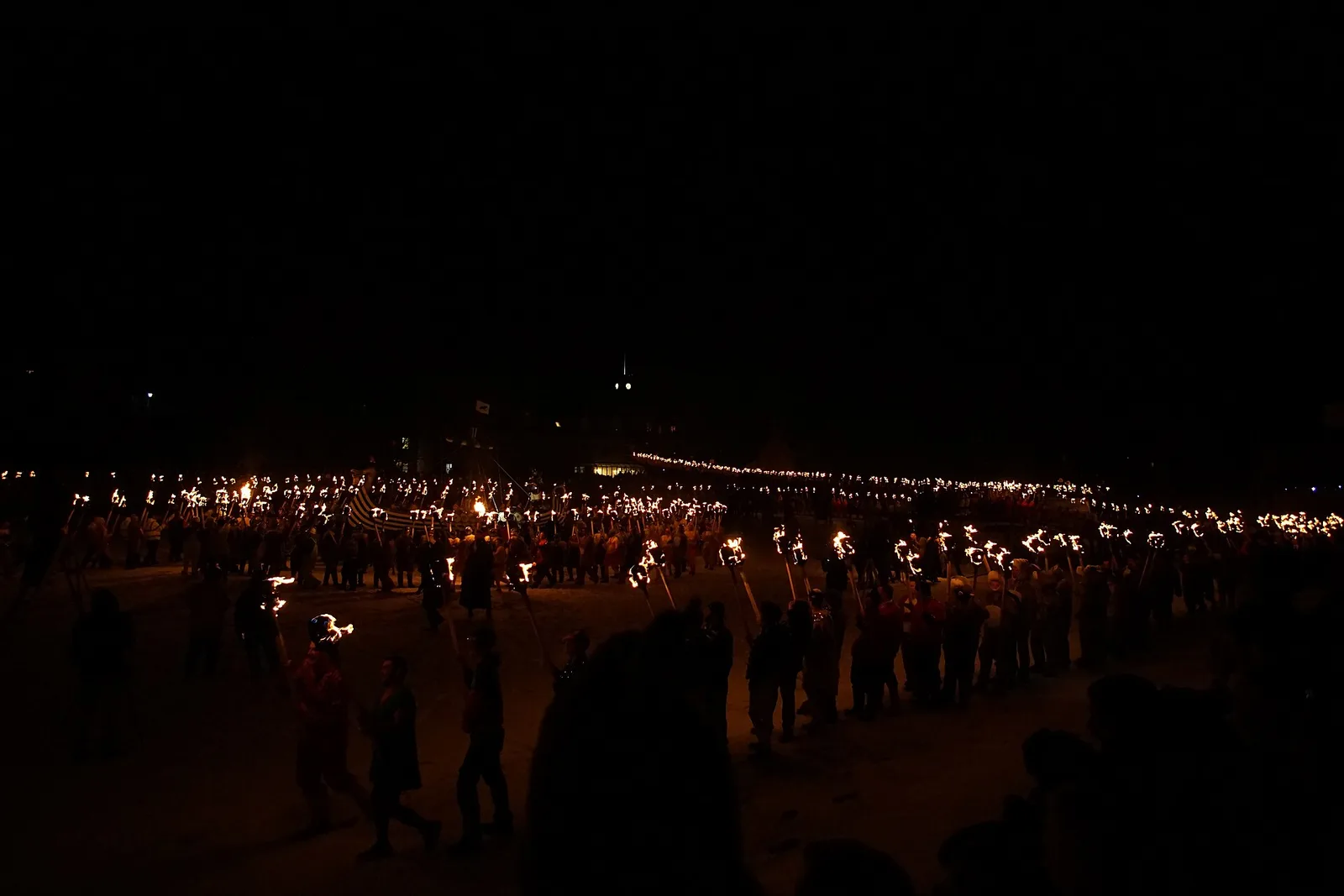
Catalogue sheet Festival TV (heading Nos Festivals): « Up Helly Aa — the Viking Fire Party Official website: https://www.uphellyaa.com
N° 6 — Boryeong Mud Festival (Boryeong, South Korea): the mudland
On Daecheon beach, in Boryeong — some 200 km south of Seoul — in the summer we don't just bathe: we roll in mud, we fight in mud, we descend mud slides and we end up, hilarious, in the mud "prison". This giant festival was born in 1998 from a marketing idea that has become a global phenomenon: promoting the mineral mud cosmetics of Boryeong, rich in Germanium and bentonite and renowned for its skin. As early as 2007, the festival attracted 2.2 million visitors; in the evening, the mud gave way to K-pop concerts and drone shows. Next edition: 30th is expected in late July-early August 2027 (dates to be confirmed on the official website).
Catalogue sheet Festival TV (heading Nos Festivals): « Boryeong Mud Festival Official website: https://www.mudfestival.or.kr/en/festival/main.htm
N° 7 — Monkey Buffet Festival (Lopburi, Thailand): The Monkey Banquet
In Lopburi, monkeys are not intruders: they are guests of honour. On the last Sunday of November, among the ruins of the Khmer Temple Phra Prang Sam Yot, a giant banquet was set up for them — watermelons pyramids, durians, ice sculptures, sweets — almost two tons of offerings according to the Obscura Atlas. The city's macacos have been venerated since the Ramayana epic, which makes Hanuman the protective hero of the city. The festival was created in 1989 by a local hotelier to attract visitors; it became one of Thailand's most amazing postcards, between religious offering, tourist attraction and great simiesque feast. Next edition: Sunday, November 29, 2026.

Catalogue sheet Festival TV (heading Nos Festivals): « Monkey Buffet Festival — the Monkey Banquet » No official dedicated site (municipal festival); documentary reference: https://www.atlasobscura.com/foods/monkey-buffet-festival
N° 8 — Takanakuy (Santo Tomás, Peru): At Christmas, we fight... to reconcile ourselves
Every 25 December, in the Andean village of Santo Tomás (Cumbivilcas province, Cusco region), we settle the accounts of the year with bare fists — then we kiss and start to zero. Insult never washed, land disputed, debt, rivalry: everything that poisoned the year is empty in framed ritual fights, to the sound of Huaylia music which gives its other name to the party, Huaylia TakanakuyIn Quechua, takanakuy means "strike each other." Men, women and children participate; nothing of a wild fight — everything is codified, from challenges launched in advance to final embraces. Researchers are still debating the prehispanic seniority of the rite, and there is no official attendance figure: the Takanakuy is measured not in spectators, but in buried quarrels. Next edition: December 25, 2026, as every year.
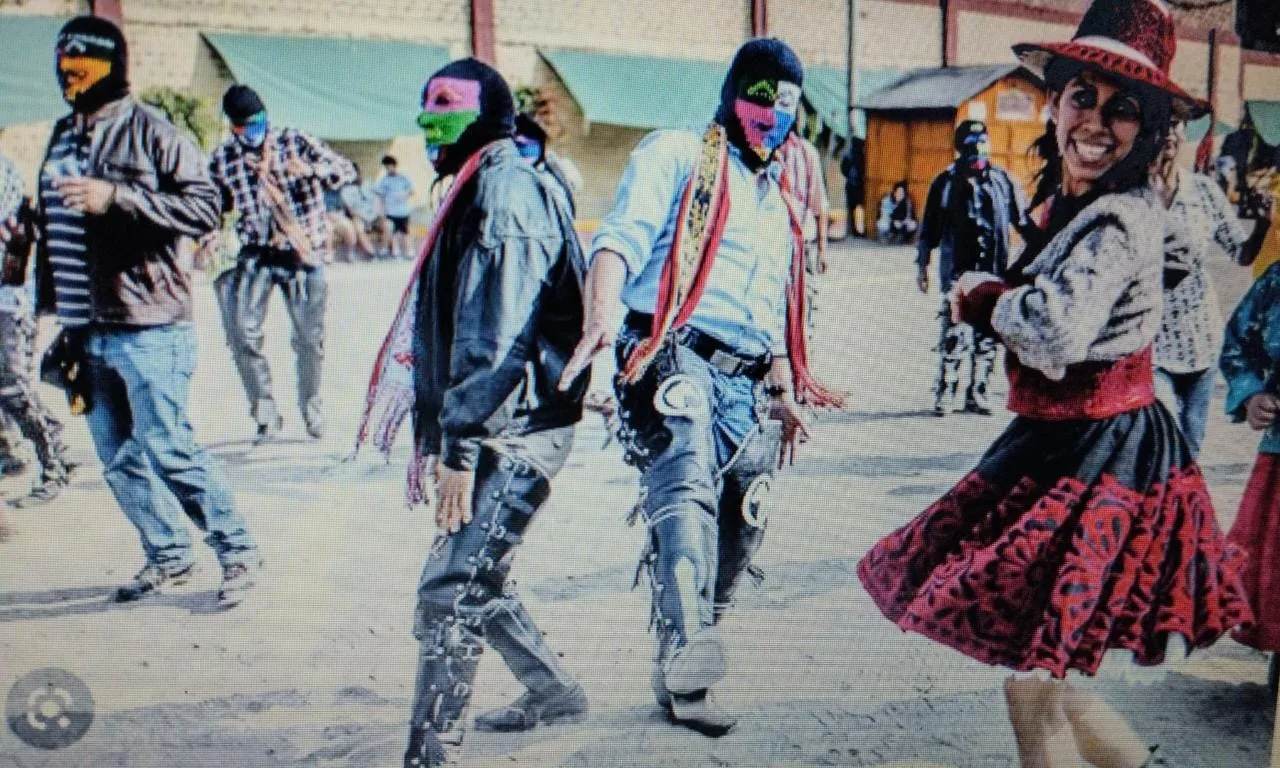
Catalogue sheet Festival TV (heading Nos Festivals): « Takanakuy — Christmas ritual fights No official dedicated site (Andean village party).
N° 9 — Eukonkanto (Sonkajärvi, Finland): World champion, you leave with his beer weight
Welcome to Sonkajärvi, in Northern Savonia, for Eukonkanto — in Finnish, Eukonkannon MM-kisat, the World Married Women's Championships, held since 1992. The principle: a 253.5 metre obstacle course — sand, wood hedges and a deep water pit of about a metre — to be crossed as quickly as possible by carrying his partner, most often installed "in the Estonian", the head down, the legs around the neck of the carrier. The partner must weigh at least 49 kg (mandatory ballast for the lightest) and be at least 17 years old. The prize of the champion couple: the weight of the partner... in beer. Local legends gave rise to discipline in the 19th century, in the force tests of the robber Herkko "Rosvo" Ronkainen, who recruited his men by carrying heavy loads through the forest. Next edition: Friday 2 and Saturday 3 July 2027 (dates confirmed on the official website).
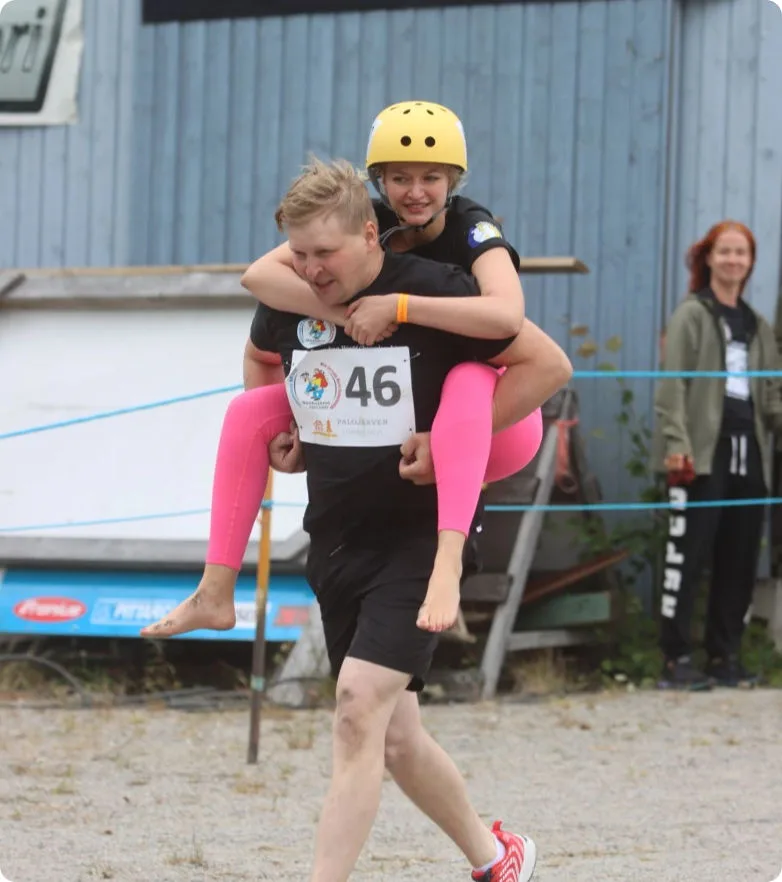
Catalogue sheet Festival TV (heading Nos Festivals): « Eukonkanto — World Married Portion Championships Official website: https://eukonkanto.fi
N° 10 — International Hair Freezing Contest (Whitehorse, Yukon, Canada): hairstyle carved by the gel
Our only Canadian representative — and what a representative! At the hot springs Eclipse Nordic Hot Springs (the former Takhini Hot Springs), half an hour from Whitehorse, the bathers are lounging in water at 40°C while the air is falling below the -20°C. The ritual: dive the head, hairstyle his wet hair in horns, waves, impossible sculptures, then wait until the cold freezes them — and ring the bell to call the official photographer. Created in 2011 and became viral in 2015, the contest has won the Guinness record for the biggest frozen hair competition: 288 participants ( 2020 edition). The winners in each category go back to the C$2,000. An honest precision, and it is part of the charm: the event is entirely weather dependent — only the days when mercury passes below the -20°C between December and March, without any fixed date. The cold decides.
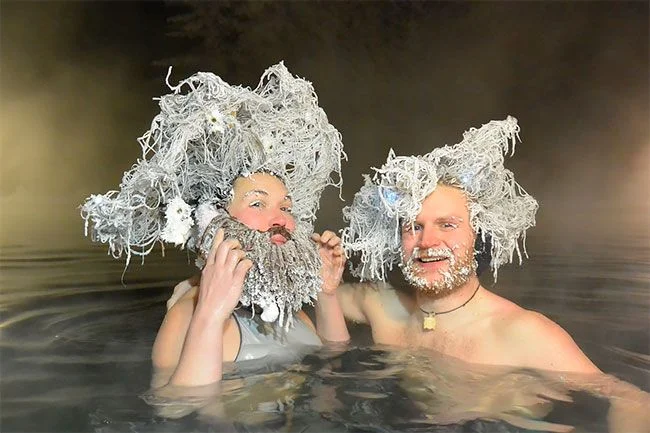
Catalogue sheet Festival TV (heading Nos Festivals): « International Hair Freezing Contest — the Jelly Hairdresser Contest Official websites: https://eclipsenordichotsprings.ca and hairfreezingcontest.com
They could have been there...
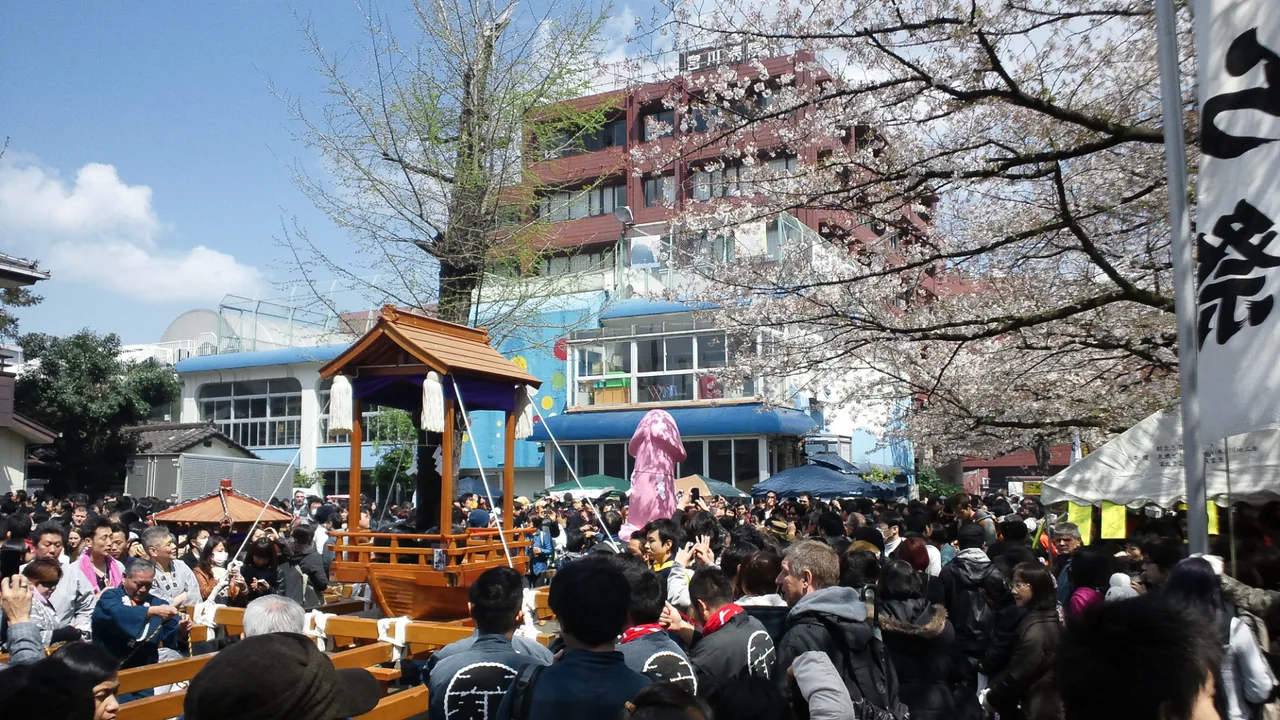
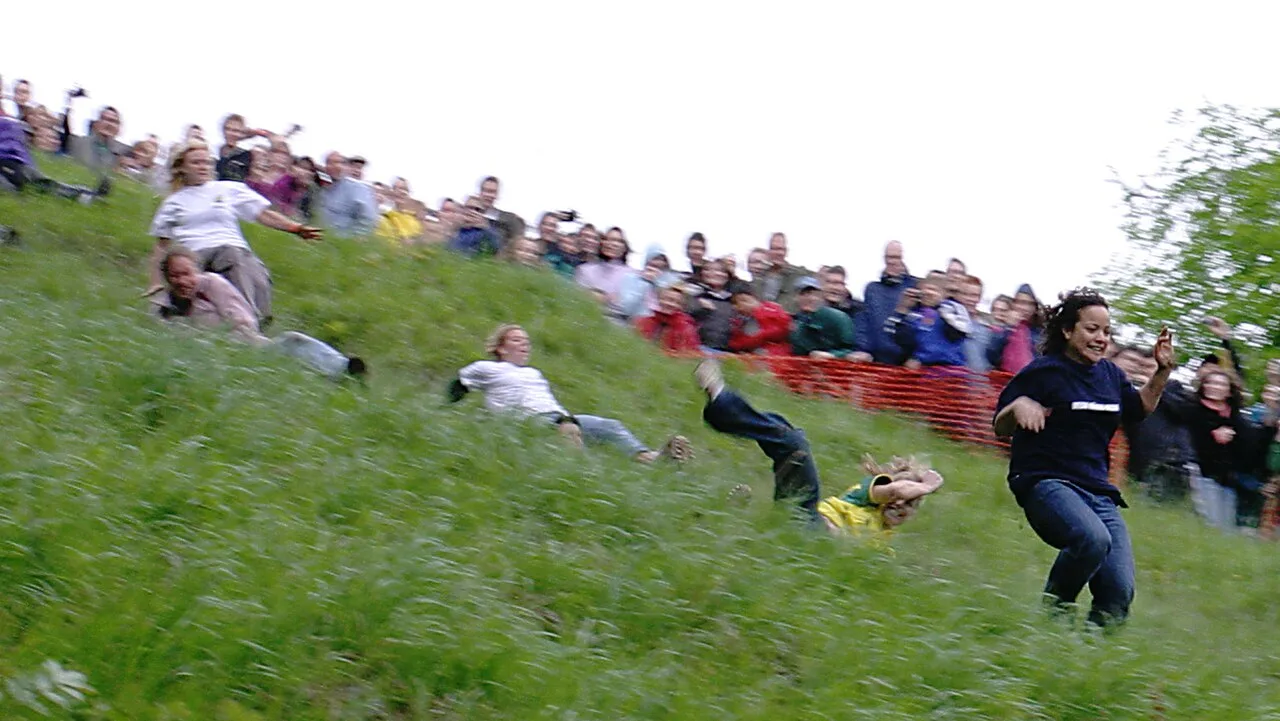
Two regulars of the world rankings remain at the door of our top 10 — they are also in the Festival TV catalogue. Kanamara Matsuri The procession is as joyful as it is uncomplexed. Cooper's Hill Cheese-Rolling Sees competitors deflating a dizzying slope in pursuit of a cheese mill launched in front of them — a tradition without official organizer, which local authorities declare every year "dangerous" without ever being able to extinguish it.
The whole world celebrates, Festival TV tells it
The Spanish Tomatoes, the Korean mud, the Shetland Fire, the Yukon Ice: these ten parties tell the same story — the need everywhere to meet around a ritual that belongs to one's own, as crazy as it is seen from the outside. They are all in our catalogue, alongside more than 230 festivals that Festival TV follows all over the world: complete sheets, future dates, photos and behind the scenes. And for those who live them from the inside, our Festival Explorer program goes to meet them, camera on the shoulder. The planet festival is huge — and its calendar is not waiting.
— Moïse 1er, the Festival Explorer